Keysight Technologies is an AI and defense winner that many investors are likely unaware of, and its latest earnings report is turning... ͏ ͏ ͏ ͏ ͏ ͏ ͏ ͏ ͏ ͏ ͏ ͏ ͏ ͏ ͏ ͏ ͏ ͏ ͏ ͏ ͏ ͏ ͏ ͏ ͏ ͏ ͏ ͏ ͏ ͏ ͏ ͏ ͏ ͏ ͏ ͏ ͏ ͏ ͏ ͏ ͏ ͏ ͏ ͏ ͏ ͏ ͏ ͏ ͏ ͏ ͏ ͏ ͏ ͏ ͏ ͏ ͏ ͏ ͏ ͏ ͏ ͏ ͏ ͏ ͏ ͏ ͏ ͏ ͏ ͏ ͏ ͏ ͏ ͏ ͏ ͏ ͏ ͏ ͏ ͏ ͏ ͏ ͏ ͏ ͏ ͏ ͏ ͏ ͏ ͏ ͏ ͏ ͏ ͏ ͏ ͏ ͏ ͏ ͏ ͏ |
| | Written by Leo Miller 
Keysight Technologies (NYSE: KEYS) is a somewhat under-the-radar technology stock benefiting significantly from multiple converging tailwinds. The company is seeing growing demand from both artificial intelligence (AI) and defense markets, two of the world’s hottest industries. Interest from these markets has helped Keysight shares soar more than 80% over the past 52 weeks. This includes the huge 23% spike the company saw after its latest earnings report. So, what exactly does Keysight do, and why exactly has this name been able to put up such strong performance? And, more importantly, is there still room for Keysight to deliver significant gains long-term? Let’s dive into these questions. Keysight: A Validation Engine Pushing Technology Forward Keysight uses a combination of hardware, software, and services to help electronics companies design, validate, manufacture, deploy, and optimize their products. Essentially, the firm offers a full-stack solution: from the research phase, to testing prototypes, to product implementation and refinement. Keysight participates in the electronic automation design (EDA) software industry, which is led by firms such as Synopsys (NASDAQ: SNPS) and Cadence Design Systems (NASDAQ: CDNS). However, Keysight’s sales are much more heavily weighted toward hardware. In its latest earnings call, Keysight said software and services accounted for around 40% of revenue, with hardware making up most of the remaining portion. This difference in revenue breakdown shows itself in the fact that Keysight’s gross margins tend to sit in the mid-60% range. While still strong, this is far below the +80% gross margins seen at Synopsys and Cadence, as software delivers higher margins than hardware. However, one advantage of providing more hardware is that it can increase customer stickiness. Keysight’s software becomes more useful as it integrates with a large base of hardware products, making customers more likely to use its full range of solutions. All of this isn’t to say that Keysight, Synopsys, and Cadence are direct competitors, although their businesses overlap. Keysight positions itself, Synopsys, and Cadence as providing complementary offerings. Synopsys and Cadence focus on modeling how chips and systems should behave in virtual environments before customers produce a physical product. Meanwhile, Keysight focuses on testing and validating how technologies actually perform under real-world physical conditions. For investors, the takeaway is that Keysight has developed its own niche that gives it an important role in electronic development, focused on validating real-world performance. They work to ensure that complex technologies across AI infrastructure, 5G, 6G, defense, and automotive function as intended after their design. KEYS Beats Big, Ups Guidance as Big Tailwinds Drive Growth Keysight performed very well in its latest quarter, with revenues rising 23% year over year to $1.6 billion. This marked the company’s highest growth rate since 2021 and solidly beat estimates, which called for growth of around 19%. Adjusted earnings per share (EPS) rose by 19% to $2.17. This smashed estimates of $2, which implied growth of only 10%. Guidance was even more impressive. The company now expects revenue and earnings to grow by 20% during the year. This compares with the company’s previous guidance, which expected revenue growth near or above 7%, excluding acquisitions. The new guidance includes acquisitions, but still represents a large improvement in Keysight’s core growth expectations. The combination of Keysight’s large beat-and-raise allowed the stock to surge in response. The company noted that it is engaging with all hyperscalers as they rapidly scale their AI infrastructure. As companies look to design and deploy AI networking solutions, Keysight is participating in the end-to-end validation of these systems. Technological development in networking is also driving more testing opportunities. In Q4 2025, Keysight collaborated with Broadcom (NASDAQ: AVGO) to validate its next-generation 1.6 terabit networking silicon and custom AI accelerators. In the final quarter of 2025, KEYS estimated that AI drove around 10% of revenue. This shows that AI remains a relatively small percentage of the overall business, providing potential for significant growth ahead. The company also posted record revenue in its Aerospace, Defense, and Government end market, which grew by 18%. Keysight is seeing demand from U.S. prime defense contractors, as well as “robust, broad-based activity in Europe." This comes as European defense budgets are on the rise. Importantly, overall orders grew by 30%, well above revenue growth, indicating that demand is accelerating. In Q2 2026, Keysight forecasts revenue growth of 30%. KEYS: AI and Defense Enabler With Valuation Question Marks The MarketBeat consensus price target on Keysight sits near $295, a figure that implies only around 3% upside in shares. However, price targets moved up substantially after the company’s latest report. The average of updated targets is approximately $308, implying 7% upside. At present, Keysight has grown its free cash flow by a compound annual growth rate near 18%, its highest level ever. The company’s current valuation implies that growth will persist at or near this rate for multiple years to come. While Keysight is operating at historically strong levels, meeting this hurdle will be difficult. The firm's elevated valuation makes it a somewhat risky play. Still, the company is sitting at the intersection of two very powerful trends: AI and defense modernization. These factors could prove enough to enable significant gains going forward. Overall, Keysight is an intriguing stock to watch, and one that could present a compelling opportunity should its share price retreat meaningfully.  Read This Story Online Read This Story Online |  I just released a brand-new tool called the Lotto Board that takes options hunting to the next level—every single day, this custom-coded engine spots a quick-moving stock, identifies the most underpriced options, plots a roadmap that targets 50%, 100%, even 200%+, and hands you the complete details to enter the trade. It's catching certain short windows where options get dirt cheap and the payoff swings massively in your favor, and unlike most setups which only show a handful of trades a week, the Lotto Board surfaces these outsized opportunities multiple times a day. See the full details and top setups right here |
| Written by Leo Miller 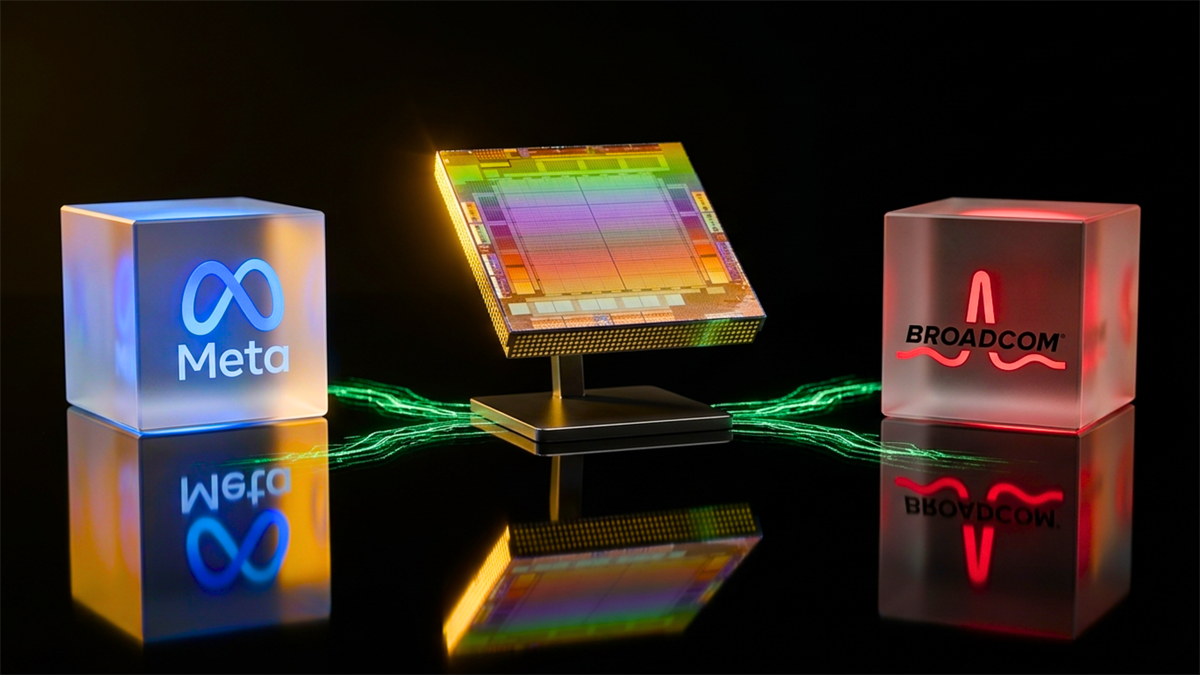
In a recent announcement, the Magnificent Seven tech giant Meta Platforms (NASDAQ: META) unveiled four customized artificial intelligence (AI) chips. This comes on the heels of semiconductor design behemoth Broadcom’s (NASDAQ: AVGO) earnings report, where CEO Hock Tan made it a point to specifically address Meta. Now, Meta is giving a wink back to Broadcom in a development that has clear positive implications for AVGO. Still, there are other negative factors worth noting. What does this news mean for Broadcom going forward? META and AVGO Confirm MTIA Partnership For some time, market watchers and analysts have generally believed that Meta is one of Broadcom’s custom AI processor buyers. However, Broadcom itself has never referred to Meta in this capacity during its earnings calls, until now. In Broadcom’s Q1 2026 call, Tan said, “Contrary to recent analyst reports, Meta's custom accelerator MTIA road map is alive and well. We're shipping now.” MTIA, which stands for Meta Training and Inference Accelerator, is a custom chip lineup developed in collaboration with Broadcom. Tan’s statement came after reports that Meta halted the development of its most advanced custom AI training chip, codenamed Olympus. Notably, Meta specifically mentioned Broadcom in its custom chip press release. The company said, “Meta Training and Inference Accelerator (MTIA), our family of homegrown AI chips developed in close partnership with Broadcom, has remained and will continue to be an important part of Meta’s AI infrastructure strategy.” Markets already generally accepted this partnership, but the fact that both companies are specifically acknowledging this now removes any doubt. The Good: META-AVGO Partnership Expands Into GenAI The title of Meta’s post, “Four MTIA Chips in Two Years: Scaling AI Experiences for Billions," provides direct support for the bullish scenario Broadcom laid out in its earnings. Hock Tan noted that the majority of its customers are moving to develop two custom chips with AVGO a year, the exact pace of development that the post describes. This lends legitimacy to Tan’s statements and the idea that Broadcom is deepening its relationships with customers. Meta is using MTIA for a variety of purposes. This includes training and inference on its ranking and recommendation (R&R) models. Training is the process of developing more intelligent models, while inference is the process of deploying those models to answer questions and perform tasks. R&R training and inference allow the company to deliver increasingly engaging content and more targeted advertisements to its users. The company has 3.5 billion users across its apps, or more than 40% of the world’s population. Thus, Meta has huge needs in this space that it is relying on Broadcom to meet. The MTIA series also extends beyond R&R. The company will use MTIA 450 and MTIA 500 to enable GenAI inference, with mass deployments coming in 2027. GenAI inference likely refers to chatbot queries, video and image generation, and AI business agents in WhatsApp. Experts have not considered Meta’s LLaMa models state-of-the-art compared to others like ChatGPT, Claude, and Gemini. However, that doesn’t mean they can’t be useful and generate revenue for the company. Notably, Meta AI has over 1 billion users, providing an opportunity to do just that. For Broadcom, the expansion of MTIA chips beyond R&R and into GenAI is positive. As Broadcom supports Meta’s core workloads and those that are emerging, the logical conclusion is more chip sales. The Bad: META-AVGO GenAI Training Chip Takes a Back Seat However, it is also important to note that Meta’s announcement did not include a GenAI training chip. This adds weight to reports that Meta is rolling back Olympus development. Meta's Chief Financial Officer, Susan Li, also recently made a statement that aligns with this at the Morgan Stanley Technology Conference. She said Meta “expects” and is “hopeful” that it can expand its use of custom silicon to train AI models "eventually." This is a negative for Broadcom, which would presumably also be co-developing Olympus with Meta. However, it is good to see that Meta isn’t saying its GenAI training chip ambitions are dead; it still wants to develop them over time. Still, the timeline for Broadcom generating significant revenue through that project may have just become much longer. AVGO and META: Powering the Growth in AI Inference Overall, Meta’s relationship with Broadcom is now fully substantiated and appears to be growing significantly outside of GenAI training. Importantly, many expect inference to overtake training as the dominant AI workload in the coming years. McKinsey predicts that inference will grow by a compound annual rate of 35% over the next five years, accounting for over half of AI compute by 2030. This supports Broadcom's outlook, as its relationship with Meta—especially when it comes to inference—is clearly deepening. Read This Story Online |  Spot the Signals Before They Become Obvious
We track early shifts in volume, structure, and emerging trends as they begin to form.
Trading Ideas focuses on data patterns that often develop before broader visibility. Join Free — Start Seeing the Data Early |
| Written by Nathan Reiff 
A weak February 2026 jobs report, active inflation, and the threat of oil price spikes and other ramifications of the ongoing Iran war all have the potential to disrupt an economy that many investors are already worried is shaky. Discount retail stores can provide unique insight into the financial stresses facing families in the lower half of the income distribution. Rising sales at these companies can signal that customers are tightening their belts and controlling spending amid economic stress. In this way, companies like Dollar General Corp. (NYSE: DG) and Dollar Tree Inc. (NASDAQ: DLTR) can offer investors insight into pressures caused by the price of essentials like food, housing, and gas. Although discount retailers can thrive in stronger economies—and their performance is, of course, closely linked to operations and company-specific concerns—their performance can also reflect broader consumer spending habits and trends. Dollar General's Strong Recent Results May Not Outweigh Anticipated Pressures to Come Dollar General recently came off a strong Q4 fiscal 2025 (ended Jan. 30, 2026), with revenue climbing by almost 6% year over year (YOY) to $10.9 billion on strong same-store sales improvement of 4.3%. Gross margin also improved by an impressive 105 basis points for the quarter, thanks to lower inventory and a reduction in shrink. The company's expansion plans are aggressive, with about 450 new U.S. stores in the works this year, a growing delivery program, and new ventures into digital territory. Still, despite those positive signs, forward guidance came in remarkably tepid, as the company expects fiscal 2026 to see slowing same-store sales growth (only 2.2% to 2.7% for the year) and net sales growth between 3.7% and 4.2%. The company also does not plan to repurchase shares this fiscal year, which puts pressure on its valuation, given that it already trades at more than 19 times earnings. While Dollar General is likely to see increased traffic among middle-income customers, its core base—those with household incomes of $50,000 or less—is under severe pressure. It makes sense, then, that shares of DG tumbled by more than 9% in the last week amid the earnings release, as well as 3.6% overall so far this year. Analysts see a little more than 10% upside potential for the stock, but fewer than half of the 30 ratings for DG shares are Buys. Dollar Tree's Multi-Price Approach Continues to Succeed, But External Challenges Loom As Well Dollar Tree also recently reported Q4 fiscal 2025 earnings (for the period ending Jan. 31, 2026), which were also notably strong in several respects. The company's comparable store sales climbed by 5% YOY, while full-year net sales rose by 10% over the same period. Gross margin improved by 150 basis points, helping to generate about $1.2 billion in cash from operations and facilitating $1.6 billion in share repurchases across the fiscal year. The company has at least two unique factors distinguishing it from Dollar General. First, its summer 2025 divestiture of the Family Dollar brand helped it to streamline operations, allowing shares to rally by almost 70% in the last year. Second, Dollar Tree's unique multi-price strategy—which expands beyond its traditional price point to include offerings priced at $3, $5, and $7, for example—has been a success. About 5,300 Dollar Tree locations, as of the end of fiscal 2025, are utilizing this approach, with multi-price representing about 16% of sales and growing. Forward guidance was also more modest, with management calling for 3% to 4% in comps growth, between $20.5 billion and $20.7 billion in sales, and earnings per share between $6.50 and $6.90 for fiscal 2026. The reality is that, despite its advantages, Dollar Tree is also subject to headwinds from tariffs, rising oil and gas prices, shifting tax rates, and more. Ultimately, Dollar Tree may have greater appeal to investors at this point, thanks to its cleaner balance sheet and stronger earnings growth path. There are still unknowns, including the external factors above, as well as the potential continued success of the multi-price strategy as the company continues to implement it on a broader scale. For the time being, analysts are also cautious about DLTR shares, assigning an overall Hold rating, with upside potential comparable to Dollar General. Read This Story Online |  Top 3 Buy-Rated Stocks Under $10 📈
Great stocks don't have to come with a big price tag. We've put together a report highlighting 3 analyst-recommended stocks under $10 that present significant growth potential. Find out why these picks could be the next big winners. Get the Free Report. |
| More Stories |
| |
|
|