Thanks for signing up for DividendStocks.com! It's the daily newsletter built for dividend and income investors. Before we can begin sending your daily updates, there’s one quick step left. Please confirm your subscription using the link below so our emails reach your inbox. Click Here to Confirm Your Subscription to DividendStocks.com Here’s a small glimpse of what you’ll get access to: Dividend Stock Ideas — Each newsletter features dividend stocks with high yields, sustainable payouts, and strong growth potential. Ex-Dividend Stocks — Want to capture upcoming dividend payouts? Find out which stocks are going ex-dividend this week. Market News and Events — Stay in the loop on the latest developments impacting popular dividend names like AT&T, Exxon Mobil, IBM, Procter & Gamble, and Verizon. Bonus: As a thank-you for confirming, you’ll also receive a free PDF copy of Automatic Income, our popular guide to building wealth through dividend investing. Let’s get your dividend journey started! Discover Top Income-Generating Stocks Here See you in your inbox soon,
The DividendStocks.com Team P.S. Don’t miss out click here to verify your subscription and secure your daily dividend insights and your free investing guide!
This Week's Bonus Content Inside D-Wave's Major Acquisition—What Changes for InvestorsSubmitted by Nathan Reiff. Posted: 1/12/2026. 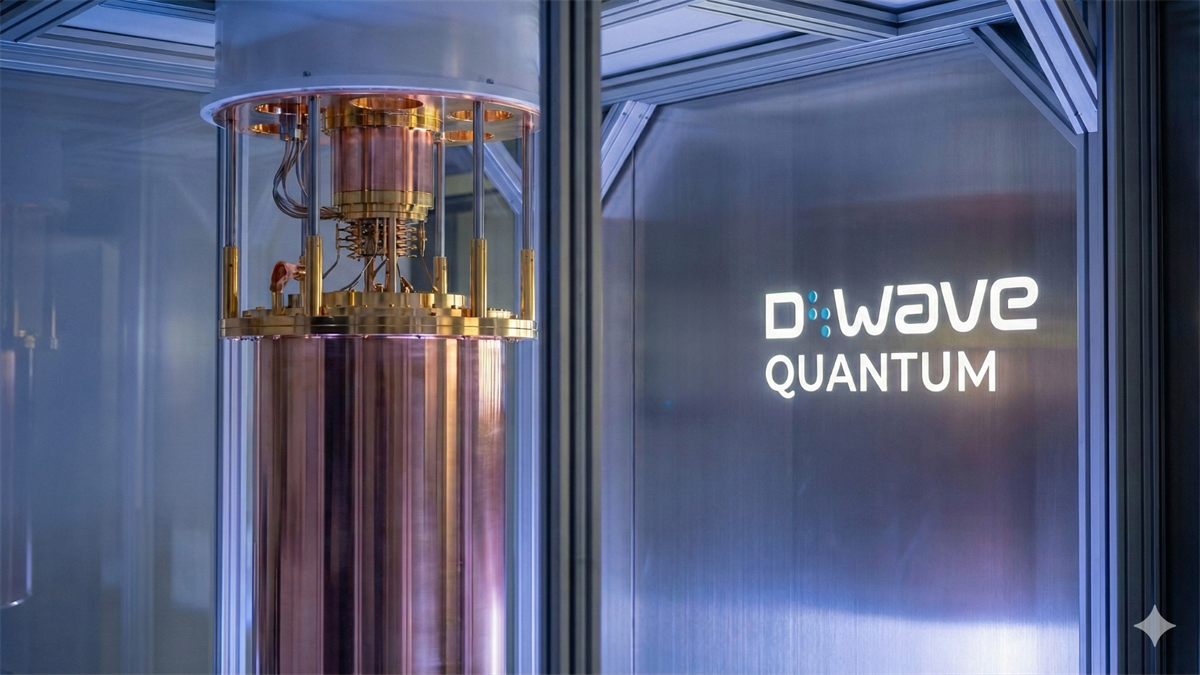
Quick Look - D-Wave has put its $836 million in cash reserves to good use, announcing in early 2026 that it would purchase rival Quantum Circuits for $550 million in cash and stock.
- The purchase comes after months of investor speculation that D-Wave would go on a buying spree.
- Acquiring Quantum Circuits should help D-Wave to close the technology gap on its gate-model-focused rivals, but commercial viability remains distant.
Popular quantum computing company D-Wave Quantum Inc. (NYSE: QBTS) has taken another step toward cementing its status as a leader in the field with its Jan. 2026 announcement that it plans to acquire privately held rival Quantum Circuits Inc. for $550 million. The deal is D-Wave's first major acquisition since it reported more than $800 million in cash in its second-quarter 2025 earnings, prompting speculation that the company was preparing a series of purchases. D-Wave has been expanding beyond quantum annealing—an approach highly effective for optimization problems but less versatile in other applications. Acquiring Quantum Circuits is D-Wave's most significant move yet toward the more widely used gate-model approach, broadening the potential use cases for its quantum systems. Why Quantum Circuits? Just like Microsoft and Adobe rode the software wave in Web 1.0, RAD Intel is riding the AI software wave in 2025. Their product helps brands instantly find the right audience and message using AI – solving the #1 waste in marketing: misfired ad spend.
Already trusted by a who's-who of Fortune 1000 brands and leading global agencies – with recurring seven-figure partnerships in place. With a Nasdaq ticker reserved, $RADI, it's early – but very real. $0.85 Won't Last – Secure Your Shares Now. With nearly $1 billion in cash late in 2025, D-Wave could have pursued several targets. Quantum Circuits stands out because of its more than a decade of work on gate-model quantum systems. D-Wave has lagged competitors such as Rigetti Computing (NASDAQ: RGTI) in developing gate-model technology. The acquisition should close that gap, giving D-Wave both gate-model and annealing systems—the latter already commercially available—strengthening its technology portfolio. Quantum Circuits is known for dual-rail technology, which includes built-in error detection. That approach enables higher-quality qubits while reducing the physical resources required in manufacturing. D-Wave expects to launch a dual-rail quantum system commercially sometime in 2026. Financial Impacts on D-Wave The Quantum Circuits acquisition may help D-Wave leapfrog competitors by enabling it to bring industry-leading gate-model systems to market in addition to its annealing-based offerings. The $550 million purchase price—$300 million in common stock and $250 million in cash—could be considered modest given the strategic value. D-Wave ended the third quarter of 2025 with $836 million in cash and equivalents, up substantially year-over-year and modestly quarter-over-quarter. Maintaining a strong cash buffer will be essential, given the company's limited revenue to date. D-Wave reported $3.7 million in revenue for the third quarter—a doubling year-over-year but still small relative to peers—and posted a quarterly net loss of nearly $141 million. Is It Time to Buy D-Wave? Shares rose to about $32 after the Jan. 7 announcement, but those gains faded by the end of the week, reflecting investor caution. When the acquisition closes (expected in January 2026), D-Wave will gain access to advanced technology but won't immediately roll out new products or achieve broad commercial viability for either gate-model or annealing systems. Thus, the acquisition is another promising development in a string of positive advances over the past year that so far have not materially increased revenue or narrowed losses. Many analysts still expect widespread commercialization of quantum technology to be years away. D-Wave may have an advantage in that race, but investors will need to wait until any company demonstrates durable commercial success. For this reason, analyst optimism surrounding QBTS shares—and Wall Street's expectation that the stock might climb roughly 20% to nearly $34 per share—comes with a caveat: D-Wave remains a speculative play. Some investors may increasingly view the company as a leading choice among quantum firms, but significant risks persist until quantum technology becomes broadly useful to a wider set of customers.
|