 SNDK, WDC, and MU dominated performance as shortages in NAND, HDD, and high-bandwidth memory collided with surging demand for AI... ͏ ͏ ͏ ͏ ͏ ͏ ͏ ͏ ͏ ͏ ͏ ͏ ͏ ͏ ͏ ͏ ͏ ͏ ͏ ͏ ͏ ͏ ͏ ͏ ͏ ͏ ͏ ͏ ͏ ͏ ͏ ͏ ͏ ͏ ͏ ͏ ͏ ͏ ͏ ͏ ͏ ͏ ͏ ͏ ͏ ͏ ͏ ͏ ͏ ͏ ͏ ͏ ͏ ͏ ͏ ͏ ͏ ͏ ͏ ͏ ͏ ͏ ͏ ͏ ͏ ͏ ͏ ͏ ͏ ͏ ͏ ͏ ͏ ͏ ͏ ͏ ͏ ͏ ͏ ͏ ͏ ͏ ͏ ͏ ͏ ͏ ͏ ͏ ͏ ͏ ͏ ͏ ͏ ͏ ͏ ͏ ͏ ͏ ͏ ͏ |
| | Written by Ryan Hasson 
The S&P 500 is on the verge of closing out another formidable year for investors, with the SPDR S&P 500 ETF (NYSEARCA: SPY) delivering a return of 17.22% heading into the final trading day of the year. And the year was defined by a set of powerful themes. Perhaps most notable was the massive memory supercycle and the continued maturation of AI infrastructure. As the early excitement around AI software cooled, capital rotated aggressively toward the physical hardware required to store, move, and process unprecedented volumes of data. And with a global shortage of high-end storage hardware components, three stocks in the semiconductor and data storage ecosystem dominated the index, outperforming even the Magnificent Seven. As we head into the final trading session of the year, here is a look at the top three performing S&P 500 stocks of 2025. Unsurprisingly, all three were direct beneficiaries of the red-hot AI hardware theme. 1st Place: SanDisk, Up 567% YTD SanDisk (NASDAQ: SNDK) stands as the undisputed top performer of 2025. After completing its spin-off from Western Digital in February and earning inclusion in the S&P 500 in November, the stock surged an astonishing 567% year-to-date (YTD). SanDisk develops and manufactures data storage solutions built on NAND flash technology. It’s a segment that has become increasingly critical to AI workloads spanning data centers, mobile devices, and edge computing. The rally was driven by a near-perfect storm, combining a global shortage of NAND flash memory with rapidly accelerating demand for fast, local storage tied to the rise of AI at the edge. As a pure-play flash provider, SanDisk was uniquely positioned to benefit from soaring prices, which roughly doubled during the second half of the year. That operating leverage showed up clearly in the results. SanDisk reported fiscal first-quarter fiscal year 2026 (FY2026) earnings on Nov. 6, posting earnings per share of $1.22, more than double the consensus estimate of 58 cents. Revenue climbed 22.6% year-over-year (YOY) to $2.31 billion, well ahead of estimates, firmly cementing SanDisk’s leadership role in the memory supercycle. 2nd Place: Western Digital, Up 290% YTD Close behind is former parent company Western Digital (NASDAQ: WDC), which had gained 290% ahead of the final trading session. The decision to separate from SanDisk proved to be a strategic turning point, allowing Western Digital to fully concentrate on its enterprise hard disk drive business. While flash memory dominates consumer devices, Western Digital’s ultra-high-capacity HDDs, now reaching 32 terabytes and beyond, have become foundational infrastructure in large-scale AI data centers. These drives are essential for long-term data storage and archival needs tied to AI model training and inference. Western Digital reported fiscal first-quarter FY2026 earnings on Oct. 30, delivering earnings per share of $1.78, topping consensus estimates by 21 cents. Revenue rose 27.4% YOY to $2.82 billion, again exceeding expectations. The results underscored how demand for enterprise storage remains structurally strong, even as the broader semiconductor cycle matures. 3rd Place: Micron Technology, Up 247% YTD Rounding out the top three is Micron Technology (NASDAQ: MU), which delivered a 247% gain before heading into the final day of trading. Micron’s breakout year was driven by its dominance in high-bandwidth memory, a critical component for NVIDIA’s latest Blackwell series GPUs. As one of only three global suppliers of HBM, Micron benefited from exceptional pricing power throughout 2025. Morgan Stanley analysts described Micron’s fiscal year performance as one of the strongest in the history of U.S. semiconductors, fueled by repeated earnings beats and accelerating demand. Micron reported fiscal first-quarter FY2026 earnings on Dec. 17, posting earnings per share of $4.78, well above consensus estimates of $3.77. Revenue surged 56.7% YOY to $13.64 billion, exceeding expectations once again. Despite reaching all-time highs in December, Wall Street remains constructive, citing Micron’s forward price-to-earnings ratio of just 7.42, which is still meaningfully below many peers in the broader computing sector. The stock currently carries a consensus Buy rating based on 37 analyst opinions.  Read This Story Online Read This Story Online |  The first half of 2026 could be very tough for certain stocks …
In fact, our research shows the current volatility is just a preview …
Because what's coming in 2026 could be much worse.
Specifically, a radical shift is about to hit the market … Click here now — before it's too late. |
| Written by Leo Miller 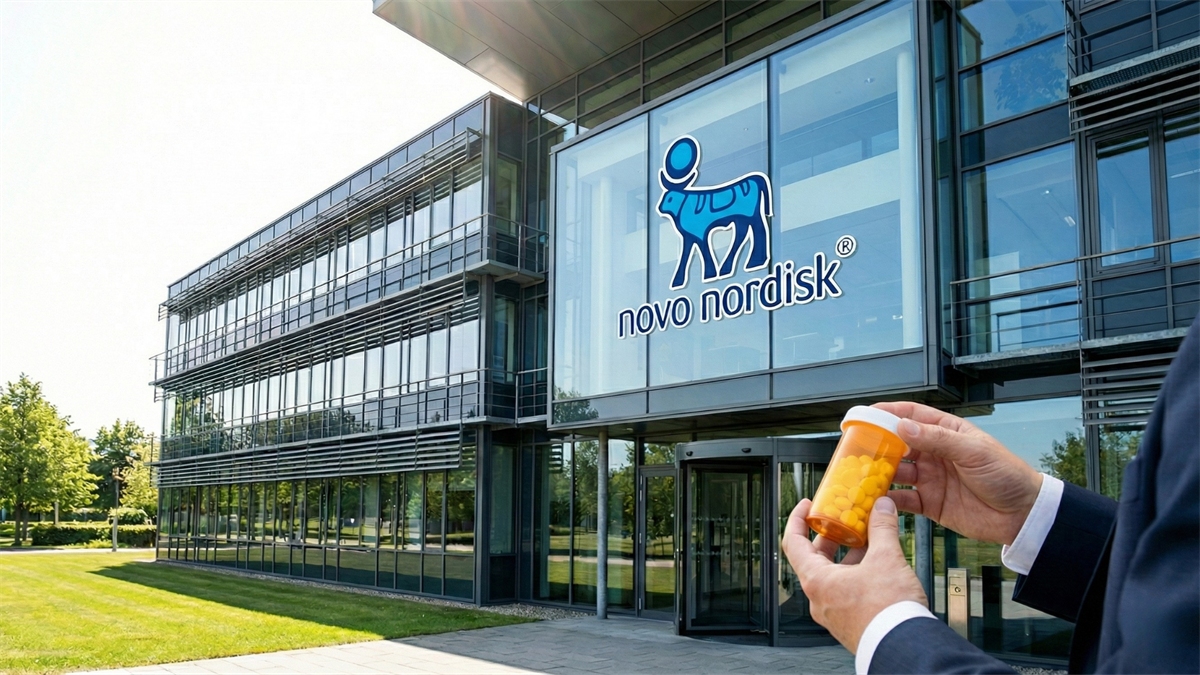
After a year that has been anything but smooth sailing, pharmaceutical giant Novo Nordisk A/S (NYSE: NVO) is closing out 2025 on a positive note. Shares received a significant 7% boost on Dec. 23. That day, markets reacted to the U.S. Food and Drug Administration's (FDA) approval of Novo’s weight loss pill. While Novo shares have delivered a total return of around -40% in 2025 as of the Dec. 30 close, the FDA approval is a development that could catalyze stronger performance for NVO stock in 2026. Let’s dive into the difficulties that Novo has faced in 2025 and gain an updated outlook on the stock going forward. Q3 2025 Shows How Fast the Growth Narrative Changed To understand Novo’s path forward, context is key. The company took the weight loss drug market by storm in 2021 through the approval of Wegovy, clinically known as semaglutide. Observing the progression of Novo’s sales growth tells the company’s story over the past few years. Novo’s Q3 2025 results are the most recent release from the company. Thus, we’ll track the Q3 sales growth from 2021 to 2025 to compare the numbers apples-to-apples. Novo’s Q3 Sales Growth by Year - 2021: 15%
- 2022: 28%
- 2023: 29%
- 2024: 21%
- 2025: 5%
After sales growth accelerated through 2023, the number fell off a cliff last quarter. The critical inflection point came in November 2023, when the FDA approved Eli Lilly and Company’s (NYSE: LLY) weight loss drug Zepbound, clinically known as tirzepatide. Zepbound helped drive Lilly’s total sales growth of 54% in Q3 2025, a massive contrast to Novo’s 5% figure. By February 2025, Lilly had overtaken Novo in terms of market share in the U.S. incretin analogs market, as seen on slide 10 of Lilly's Q3 earnings. “Incretin analogs” is a blanket term used to describe GLP-1 and similar drugs. Since then, Lilly’s lead has only grown. This comes as injectable tirzepatide is about 50% more effective at inducing weight loss than injectable semaglutide. However, Novo’s latest drug may allow the company to regain momentum in a war it is losing. NVO’s Pill: Potential First Mover and Efficacy Advantages Over LLY Oral weight loss drugs have become a new front on which Novo and Lilly are competing. Both companies aim to reach patients who are averse to injectables, and benefit from lower manufacturing costs while helping patients maintain their weight loss. The approval of its oral Wegovy pill gives Novo the high ground in multiple ways. First off, Novo has a head start on Lilly, as it expects to begin selling the pill in January 2026. Meanwhile, Lilly’s oral solution, orforglipron, is not yet approved. Most expect that the FDA will approve orforglipron, but not until late March at the earliest. This means Novo will likely have several months to gain market share among oral GLP-1 patients. Additionally, the efficacy of the two drugs shows that Novo may be able to maintain its lead. Novo’s latest data on oral Wegovy showed that patients lost 16.6% of their weight on average after 64 weeks. This compares favorably to a study that Lilly released in September which showed that orforglipron patients lost an average of 12.4% of their weight after 72 weeks. Adjusting for placebo weight loss and patients who discounted the treatments narrows this lead—adjusted figures are approximately 11.2% weight loss for oral Wegovy, and approximately 9.1% weight loss for orforglipron. Still, oral Wegovy patients lost more weight than orforglipron patients in a shorter amount of time. This difference could lead patients to stay on oral Wegovy even after orforglipron’s release and make doctors more likely to recommend Novo’s treatment to new patients. What FDA Approval of the Wegovy Pill Changes for 2026 Novo urgently needs a product that will reaccelerate its growth, and oral Wegovy could be precisely that. With shares down significantly, it would not be surprising to see Novo shares rebound solidly in 2026. However, the firm's long-term success will be predicated on its ability to continue delivering new and improved weight loss treatments. One drug in the late-stage pipeline, CagriSema, helped patients lose an average of 22.7% of their weight at 68 weeks, and could go a long way in achieving this. Overall, the outlook on Novo shares looks solidly skewed to the upside. However, oral Wegovy’s sales growth in 2026 will be key to evaluating the firm’s ability to keep up with Lilly long-term. Read This Story Online |  If you want a way to generate consistent market income without chasing volatile AI stocks or complex crypto trades, you'll want to see my new e-book, How To Master The Retirement Trade. It reveals a simple, time-based strategy that targets trades designed to play out in as little as 11 hours — no guesswork, no hype. Claim your free copy of How To Master The Retirement Trade now |
| Written by Jeffrey Neal Johnson 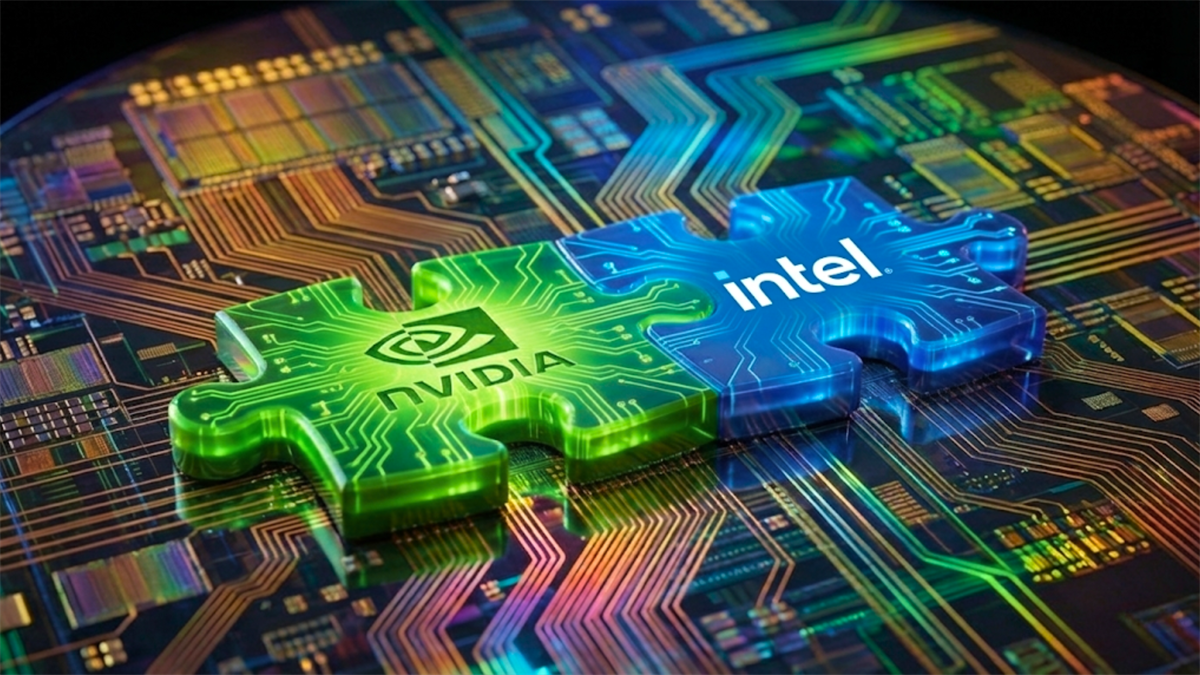
For over a decade, the semiconductor industry was defined by a rivalry between Intel (NASDAQ: INTC) and NVIDIA (NASDAQ: NVDA). One company dominated the Central Processing Unit (CPU) market that powered personal computers, while the other quietly built an empire in Graphics Processing Units (GPUs) for gaming and eventually artificial intelligence (AI). However, December 2025 marked the definitive end of that era of opposition. The geopolitical landscape of Silicon Valley was dramatically reshaped by a move that stunned Wall Street: NVIDIA finalized a $5 billion private placement investment in Intel, following regulatory approval for the deal. This transaction is not a financial lifeline for a legacy giant that has struggled to find its footing; it represents a pragmatic armistice driven by the harsh realities of the AI supply chain. For investors, this deal fundamentally changes the risk profile of Intel stock. Throughout 2024 and the first half of 2025, Intel traded at a significant discount due to bankruptcy risk. The company faced a perfect storm: removal from the Dow Jones Industrial Average, the suspension of its dividend, and massive capital expenditures that drained its cash reserves. The stock price plummeted more than 50% from its historical highs as the market questioned whether the company could survive its own restructuring. NVIDIA’s capital injection answers that question definitively. By taking an equity stake, the world’s most valuable semiconductor company has signaled that Intel’s survival is necessary for the health of the entire industry. This creates a psychological and financial floor for Intel’s stock price, suggesting that the worst of the volatility may finally be in the rearview mirror. It’s Not Charity, It’s Strategy To understand why this deal is a catalyst for Intel’s stock, investors must look past the headline dollar amount and focus on the underlying technology. NVIDIA did not invest $5 billion to own a piece of Intel’s legacy CPU business. It invested because it desperately needs Intel’s Advanced Packaging capacity. In early 2025, NVIDIA faced a crisis that threatened its growth trajectory. Its flagship Blackwell AI chips encountered thermal management issues; essentially, the chips were generating too much heat when packed tightly into data center racks. This problem was exacerbated by severe supply constraints at Taiwan Semiconductor Manufacturing Company (NYSE: TSM) (TSMC). TSMC struggled to expand its CoWoS (Chip-on-Wafer-on-Substrate) capacity fast enough to meet global demand. NVIDIA needed a release valve, and Intel was the only company with the infrastructure to provide it. Intel possesses two critical packaging technologies that solve these specific physical limitations: - EMIB (Embedded Multi-die Interconnect Bridge): This allows different chips to be connected side-by-side on a single flat package, speeding up data transfer.
- Foveros: This method stacks chips vertically, like pancakes, saving space and improving power efficiency.
By securing access to Intel’s packaging facilities in Arizona and Ohio, NVIDIA is hedging against future bottlenecks. For Intel shareholders, this is the ultimate proof of concept. If Intel’s manufacturing standards are rigorous enough to satisfy NVIDIA, the world's most demanding hardware client, it validates the quality of Intel Foundry Services (IFS) for the broader market. This endorsement is a marketing win, likely attracting other fabless chip designers who were previously hesitant to leave TSMC. The Tan Turnaround: Data Over Hype While the NVIDIA deal provides the external validation, the fundamental recovery of Intel’s operations is being driven internally by CEO Lip-Bu Tan. Since taking the helm, Tan has shifted the company’s culture from one of technological optimism to data-driven realism. Under the previous leadership regime, Intel often over-promised and under-delivered on its manufacturing milestones, eroding investor trust. Tan’s strategy, dubbed Radical Simplification, has focused on cutting bloated middle management and focusing entirely on factory execution. The most critical metric for investors to watch is the yield rate, the percentage of functional chips produced on a silicon wafer. Poor yields burn cash; high yields print money. - Yield Improvement: On the critical 18A process node, yields have improved at a predictable rate of roughly 7% month-over-month throughout the latter half of 2025.
- Cost Discipline: The company has successfully executed a massive cost-reduction plan, exiting low-margin businesses to preserve capital for manufacturing.
Furthermore, the downside risk for the stock has been capped by the US government. In August 2025, the US Treasury finalized a 9.9% equity stake in Intel as part of the CHIPS Act stipulations. This is not free money; it comes with strict oversight on executive pay and stock buybacks. However, for a recovering company, this oversight is a positive factor. It ensures capital is spent on factories, not perks. Between the US government (focused on national security) and NVIDIA (focused on supply chain security), Intel has secured two of the most powerful backers on the planet. This dual support structure drastically reduces the likelihood of a liquidity crisis. From Distressed Asset to Critical Infrastructure As we look toward 2026, the narrative for Intel has shifted from survival to utilization. The factories are built, the technology is validated, and the order book is beginning to fill. The upcoming Panther Lake consumer processors are set to ramp up production in early 2026, and NVIDIA’s packaging orders will start to significantly impact revenue shortly thereafter. The semiconductor industry has bifurcated into a clear structure: NVIDIA designs the brains of the AI revolution, and Intel has pivoted to building the physical infrastructure required to produce them. By accepting its role as a service provider to its former rival, Intel has secured its future. For investors, the current valuation represents a rare opportunity. The company has transitioned from a distressed asset with bankruptcy fears to a piece of critical infrastructure backed by the state and the industry leader. While the explosive, high-beta growth of the early AI boom may belong to NVIDIA, the steady, stabilized recovery trade belongs to Intel. With the armistice signed and the factory floors humming, the foundation for a long-term rebound is officially in place. Read This Story Online |  For the first time ever, James Altucher – one of America's top venture capitalists – is sharing how ANYONE can get a pre-IPO stake in SpaceX… with as little as $100! [[Click here now to view.]] |
| More Stories |
| |
|
|




![[How To] Invest Pre-IPO In SpaceX With $100!](https://www.marketbeat.com/images/webpush/files/thumb_20251107163807_pushbusiness-1730089640.jpg)


