 | I'm not sure how it got to be almost September. I hinted at this a few of months ago, then I blinked and here we are: On Tuesday, two days after you read this newsletter, I'll be delivering my youngest daughter to college in another state. She's bringing 13 pairs of shoes, a dozen hoodies and one book — mine, which she sweetly purchased used from Goodwill over the weekend. "Don't feel bad, mama," she said, when I blushed to hear that the debut novel I toiled over for five years had been tossed into somebody's giveaway pile. "I think it's kind of cool how everything comes back around again."
This new role of hers, one in which she's rationally comforting me as often as I'm rationally comforting her, is a shift I've noticed as she's transitioned into adulthood. It's been the same way with her older sister — at some point, if we're lucky, our children become our peers. Now, instead of reading to them, I ask them what they are reading. She just finally read Nickolas Butler's Shotgun Lovesongs (one of my all-time favorites), then moved on to George Orwell's Animal Farm (haven't read it, sorry). But summer is ending, and soon she'll be busy with college textbooks while I'll be back here at home wishing we were snuggled in bed together, each of us holding one half of a picture book.
As you can imagine, I curated a pretty stacked library for my girls over the years. We each had our favorites. Mine, I'm realizing now, were very Gen-X: 1975's "Miss Nelson is Missing," about a too-nice teacher who "disappears" one day while a meaner version of herself returns to teach those rotten students a lesson; and 1977's "The Terrible Thing That Happened At Our House," about a mother who more or less destroys her children's lives by going back to work (gasp). My older daughter — at turns dramatic and serious — loved a book I can't remember the name of for the life of me. It was her favorite mostly because it was filled with nonsense words that ran all over the page and I performed it in a lengthy, breathless, riotous monologue complete with much wiggling and special voices. My younger daughter — hilarious and creative — loved "Woolbur." It was about a free-spirited sheep who, every time someone derisively pointed out something "weird" about him, would say, "I know. Isn't it great?"
Lately I've been thinking about all the books they never read — titles I tracked down so as to provide them with the exact editions I loved when I was their ages. These were written by authors like Judy Blume and Cynthia Voigt, with covers that apparently stopped appealing to newer generations but still send me straight back to my girlhood upon sight. There's an entire bookcase at their dad's house waiting to be dealt with; favorites I collected for them that they ignored me about reading. Now I don't live there anymore and, soon, neither will they.
I think I will drive over there and reclaim them, maybe send them one by one to my college-bound kid in a series of care packages. It's hard, and it's sad, and it's exciting, and it's complicated. But I do think it's kind of cool how everything comes back around again.
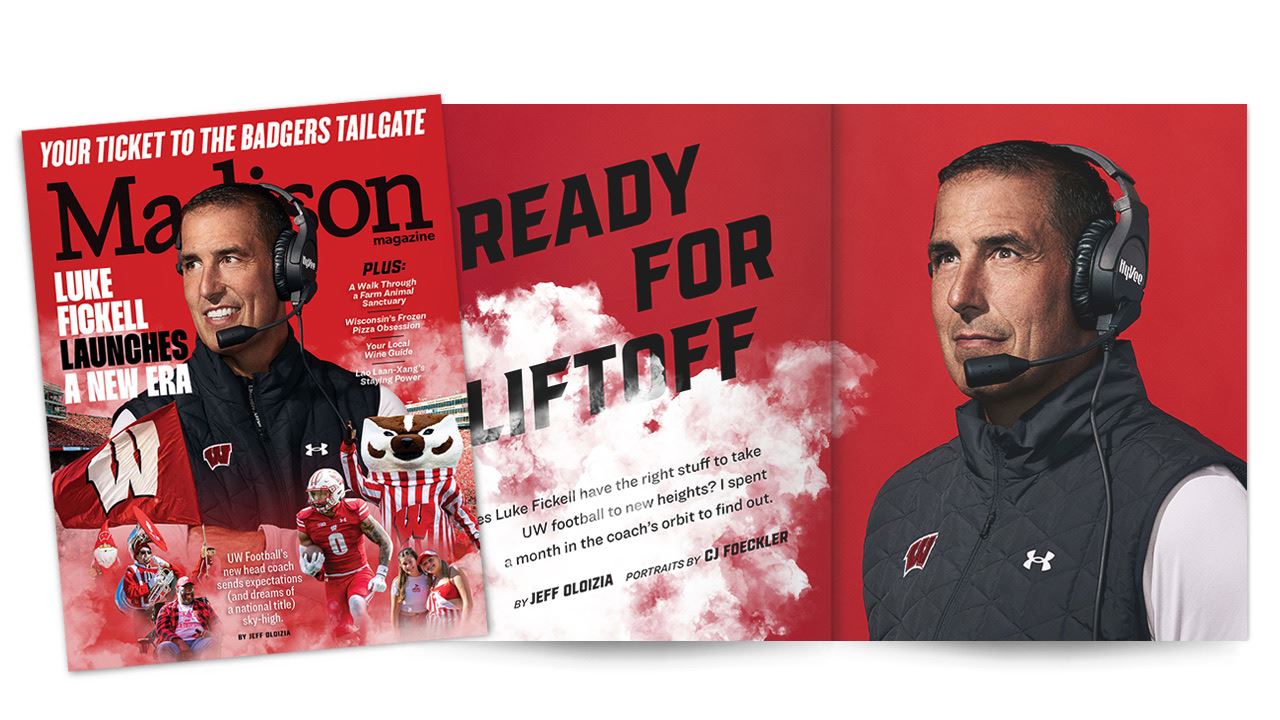
Maggie Ginsberg is a senior editor at Madison Magazine and author of the novel, "Still True," which is the honorable mention selection for the 2022 Edna Ferber Fiction Book Award and a 2023 Midwest Book Awards honoree. She curates this monthly newsletter for Madison Magazine. Reach her at mginsberg@madisonmagazine.com. | | | |